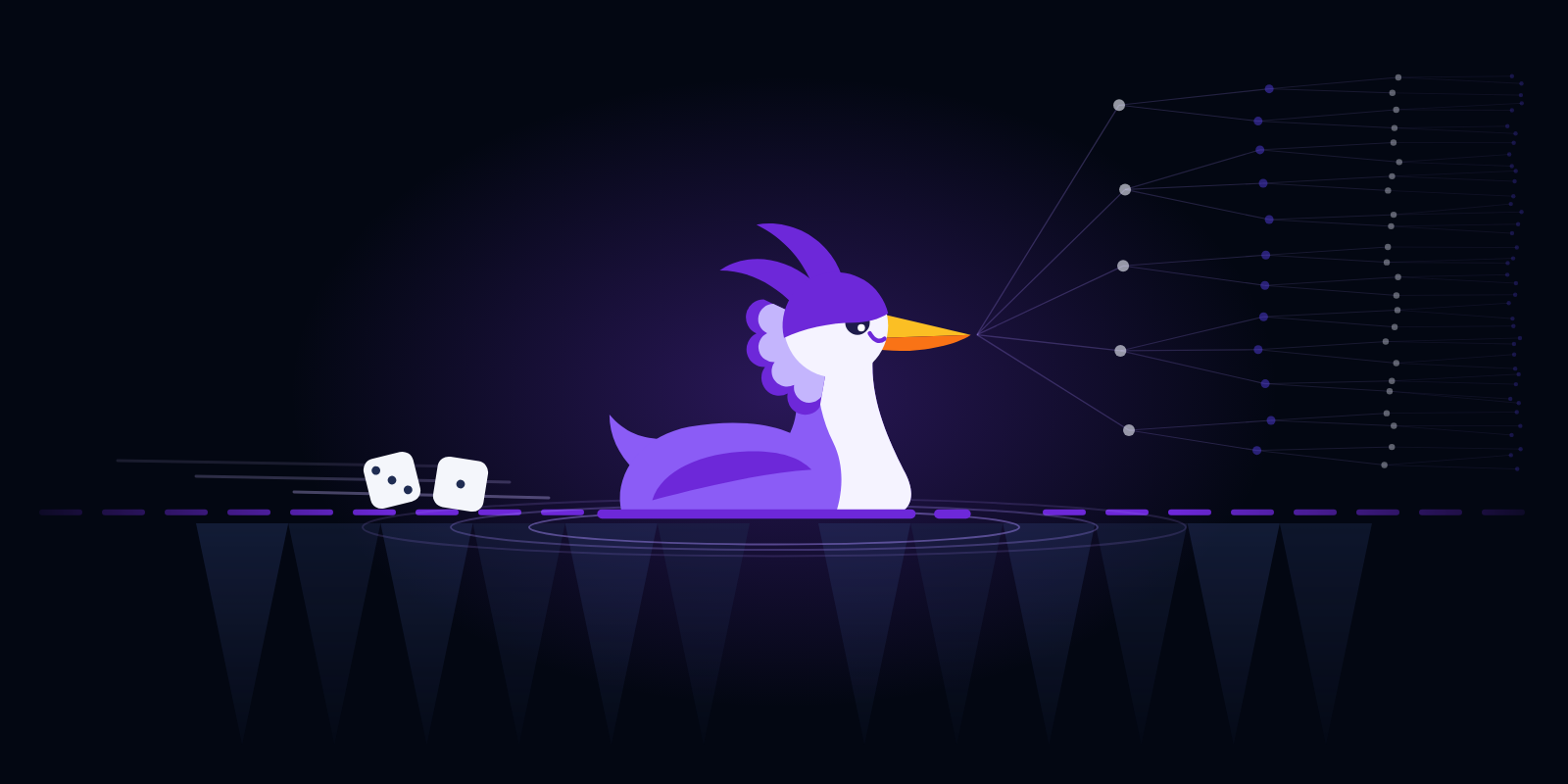
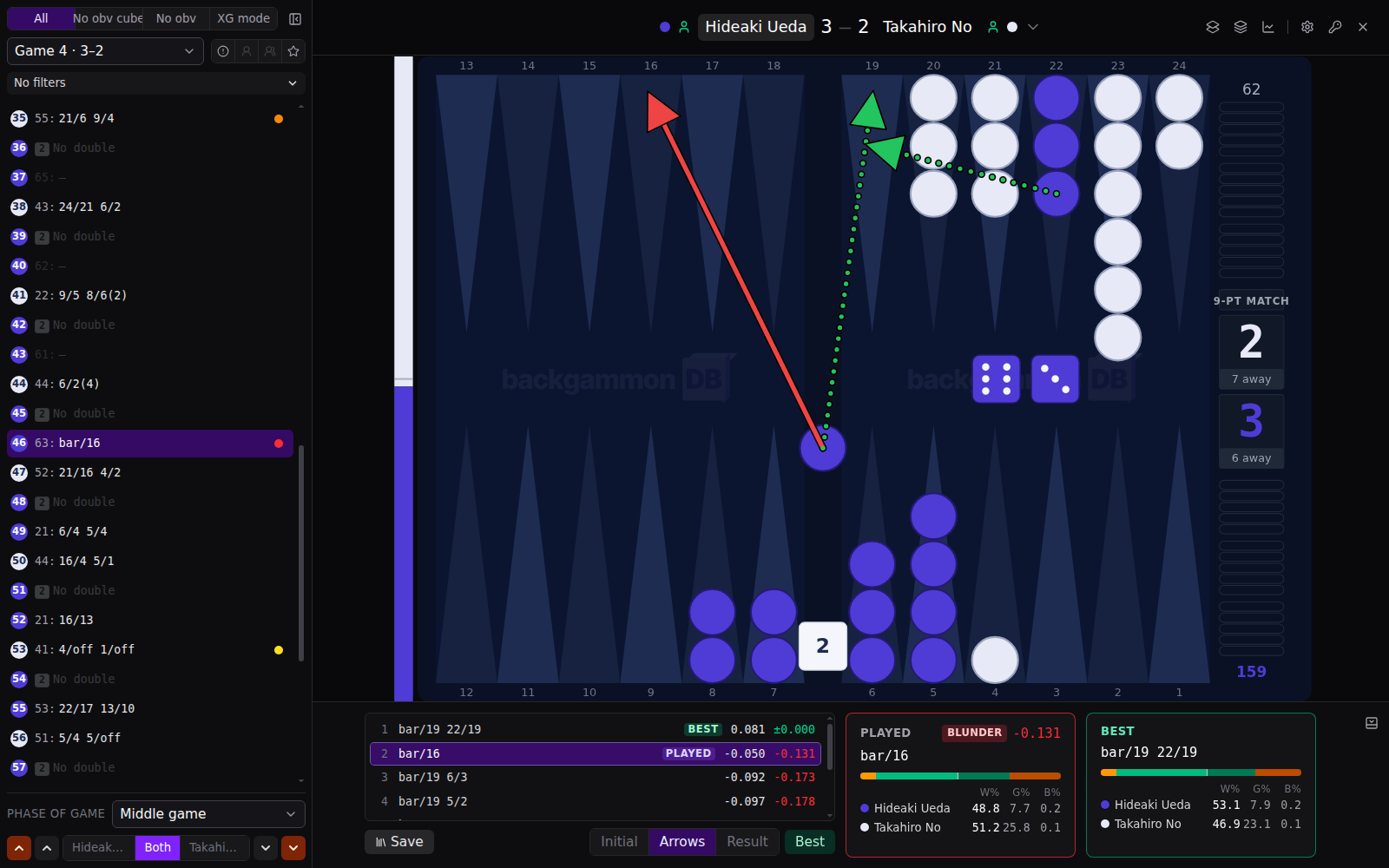
Today I'm very excited to release Grebe, a new backgammon engine. It is integrated today in BackgammonDB. You can play Grebe now for free, there's no cost or sign-up. If you use BackgammonDB, then every match and position you play will go into your database automatically. If you upload any file you'll now be offered match analysis through Grebe in your browser rather than the server-based solution we had before.
If you're interested in the code, check out the package on npm and the code on GitHub.
Why build Grebe? There have been a lot of new backgammon engines released in the last six months, many claiming to be XG-beating in their performance. The goals of Grebe are different: I didn't set out to build the absolute best and push the frontier of backgammon analysis. I just wanted something good enough: it needed to be open source, work in the browser, and be strong enough that you can trust its analysis in the vast majority of positions.
That's why I called it Grebe — it stands for Generally Reliable Engine for Backgammon Evaluation. Tongue in cheek, yes, but a reminder (to myself, and to others!) that the goal here is generally reliable, not world-beating.
With all that said... Grebe is actually really, really good. Not at the absolute frontier, but it looks exceptionally strong. It comes in two flavors: Grebe Quick, which plays almost instantly, and Grebe Smart, which moves in under a second. Grebe Smart, searching to depth 3, beats gnubg at 3-ply (depth 4 in XG's count), head to head. XG World Class grades its play at a PR of about 0.3 (I tuned against XG, so take that with a pinch of salt). Sage's own reference, in its benchmark, gives it a PR of ~0.4, level with XG Roller+.
Grebe has not trained a new neural net: It is built on the incredible, open-source work of PureTD, by Alex Strehl. Grebe's board, move generation and cube formulas come from HedgeHog, by Eran Lambooij. Both projects are MIT-licensed, as is Grebe. On top of that, Grebe adds a deeper search that a browser can afford, the cube handling inside it, match play and the two-sided bear-off table.
I won't get further into the weeds of the benchmarks etc here: you can read all the technical details on the dedicated Grebe page.
Your home for backgammon study.
With BackgammonDB you can review your matches, analyze any position, build a position database, drill your weak spots, and track your progress over time. Free, no account required.